"So it's like Pilates, right?"
It's one of the questions we hear most from people walking into House Of Lagree for the first time. Both workouts are low impact. Both are done with control. Both can use spring resistance and a moving carriage. From across the room, they can look alike.
But Lagree isn't a style of Pilates, a version of reformer Pilates or a modern update of it. It's its own method, built around a different goal. Here's what that means.
TWO METHODS, TWO DIFFERENT GOALS
Pilates is a common method with its own history, equipment, teacher education and principles. Joseph Pilates originally called his system, in the 1920s, Contrology: a comprehensive approach to movement and physical conditioning, built around breath, precision, alignment, stability, coordination and control. It was used early on to help people with limited mobility and later became a tool for dancers recovering from injury. Work can happen on a mat, a reformer, other apparatus, or with adaptations such as bands. Reformers come from many manufacturers, but no single machine is mandatory. Training runs through many schools, online platforms and organizations, so real standards exist however there is no governing body to make sure a Pilates studio is following the method.
Lagree draws from bodybuilding principles to build strength and muscular endurance. Slow, deliberate reps maximize time under tension, keeping muscles working from one rep to the next. Progressive overload helps you push past plateaus by gradually increasing the challenge through more resistance or longer sets. The result is high-intensity, low-impact training.
Both are real exercise. The difference is what each one is designed to do.
WHY SLOW IS SO DEMANDING
Lagree's pace can look relaxed. It feels very different once you're on the machine.
When you move slowly, momentum can't do the work for you. Your muscles control every inch of the movement, on the way out and on the way back. Keeping tension on through the whole range means the working muscles don't get a break mid-set, so effort builds steadily toward fatigue. That's what makes a relatively short set feel so full.
You'll often hear a 4-count as the carriage moves out and another 4-count as it returns — typically about 8 to 10 seconds in each direction, or 16 to 24 seconds for one repetition. Some Lagree classes can go even slower, and the count can vary. Traditional Pilates also teaches controlled movements but more at a flowing pace. Its tempo depends on the exercise and the style, and some contemporary or fusion formats move faster. In Lagree, that slow, reduced-speed movement is one of the main ways the method creates intensity.
Sometimes that means your muscles shake. That isn't the goal or a measure of a good class. Good form and the right resistance for your body come first.
RESISTANCE IS MORE THAN THE SPRINGS
A lighter spring doesn't always mean an easier exercise. In Lagree, resistance comes from more than spring tension. Where your body is positioned, the leverage of the movement, how gravity is working against you, your tempo, your range of motion and how long you hold the effort all change how hard something feels.
This is also why similar-looking equipment doesn't mean a similar workout. Springs and a carriage are just the starting point. How they're used is what defines the method.
THE MEGAFORMER IS ITS OWN MACHINE
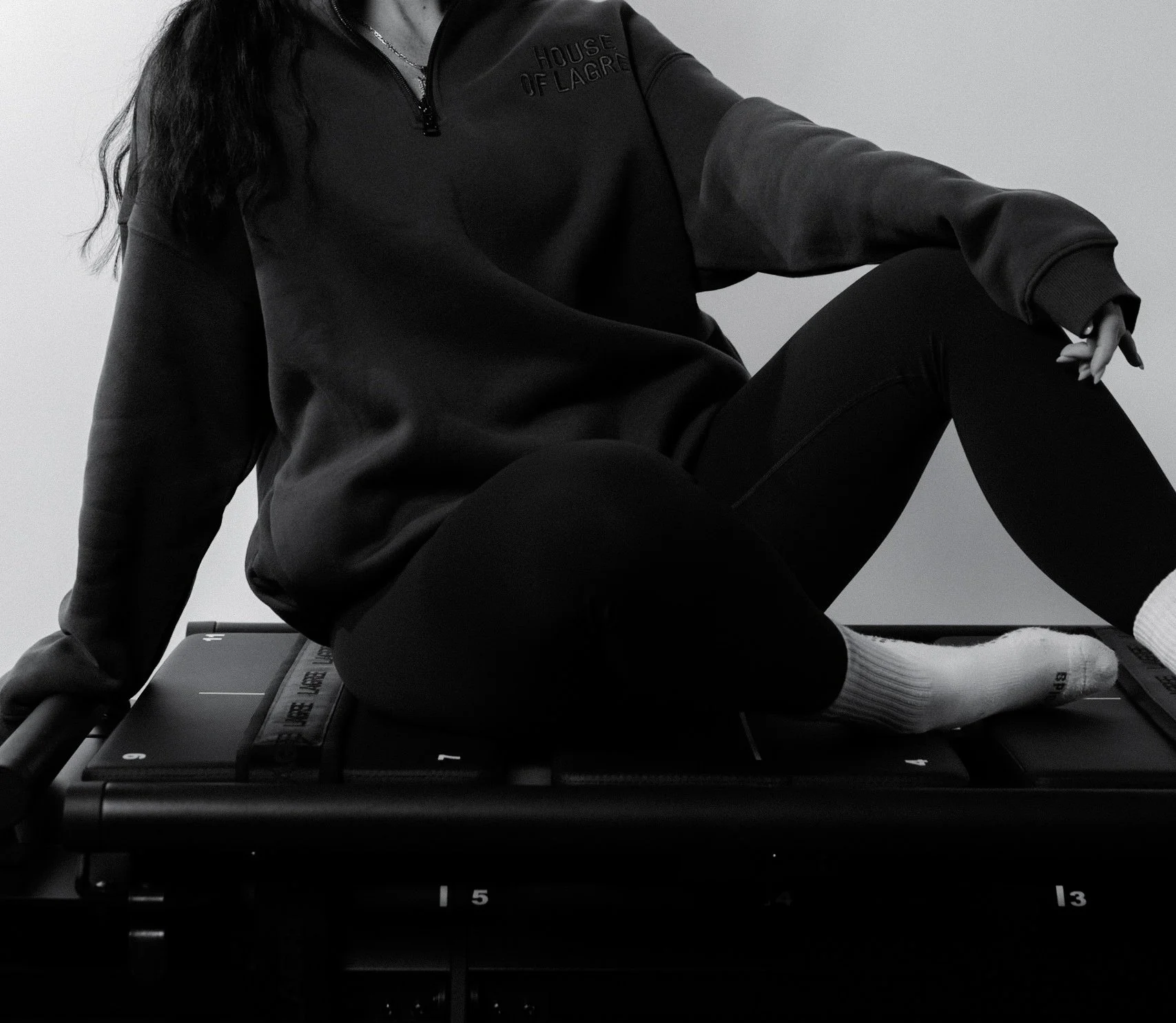
At House Of Lagree, we teach Lagree on the Megaformer, equipment developed specifically for the Lagree Method. It isn't a reformer. The Megaformer is patented, proprietary Lagree equipment, built for the way the method is sequenced: many positions, from standing to kneeling to plank, and smooth transitions from one exercise to the next.
Authentic Lagree brings together the method, official education and equipment created or authorized by Lagree Fitness. A lookalike machine isn't enough; without that authentic equipment, it isn't Lagree. Commercial studios that offer Lagree also need to obtain and maintain a license to use the method and name. Lagree isn't a franchise. Owners run their own businesses, and the license is what authorizes them to teach authentic Lagree on authentic equipment.
The method is guided by a set of principles that cover things like form, range of motion, tempo, how long you work, the order of exercises, how you move between them, constant tension and the direction you're moving in. You don't need to memorize any of it; your instructor builds it into every class.
Take a closer look at the equipment in our Megaformer vs. Pilates Reformer guide.
WHAT A LAGREE CLASS ASKS OF YOU
In one session, Lagree challenges strength, muscular endurance, core engagement, balance and flexibility, and with steady work and quick transitions, your heart rate rises too. It's integrated, full-body resistance training without running or jumping.
That continuous effort is intentional. There is no programmed downtime, so your muscles stay under tension as you move from one exercise to the next. If you need a pause, take one and let your instructor know; this is not a rule that you can never rest. Pilates often has a different rhythm, with more time for setup, instruction or changing positions, and some classes include stretching. Many Pilates sessions are still challenging. Lagree treats that sustained tension as part of how it builds strength and endurance.
That makes Lagree a great fit if you want serious strength and endurance work that's lower impact, or a focused class that isn't built around the gym floor. Low impact doesn't mean risk-free or right for every situation, so if you have an injury, are pregnant or are managing a health condition, check with your healthcare provider and let your instructor know before class.
And you don't have to choose sides. Plenty of people enjoy both Pilates and Lagree. They simply offer different things.
WHY WE CHOSE LAGREE
For Maria Fernandes, our owner and head instructor, the choice was personal. She loved high-intensity workouts, but Pilates hadn't offered her the intensity she was looking for. With Lagree, she found she could challenge herself in a way that felt safe within her lower-back limitations, and walk away feeling energized and motivated.
Maria wanted to bring that same kind of workout into her own studio and share it with the Edmonton community. At House Of Lagree, we teach the Lagree Method on Megaformers because we love what it delivers: demanding, thoughtful, full-body training built around slow movement and continuous tension. Our classes are capped at 12 clients, so your instructor can coach you through the movements and help you find the right level of challenge, whether it's your first class or your hundredth.
Read more about Maria’s journey and how House Of Lagree began.
FEEL THE DIFFERENCE FOR YOURSELF
The best way to understand Lagree is to try it. Come see us at one of our three studios in Central (Oliver/Wîhkwêntôwin), Keswick or Sherwood Park. Our team will guide you through your first class on the Megaformer.