If you've seen a Megaformer and a Pilates reformer from across the room, it's easy to group them together. Both have a moving carriage and use spring resistance, and both ask you to work with control instead of bouncing through a workout.
Once you get closer, the machines aren't built the same way, and they aren't built for the same kind of class. At House Of Lagree, we teach the Lagree Method on Megaformers. Here's how the equipment itself is different, and why that design matters once you're on it.

THEY SHARE A FEW MECHANICS, NOT A DESIGN
The overlap people notice is real: a sliding carriage, springs, and handles or straps. That's usually where the mix-up begins.
A reformer is a category of Pilates equipment that has been around for generations, not a single proprietary product. Today’s reformers come in many sizes and setups, depending on the maker and the model. Lagree has described a typical traditional reformer as about 86 inches long, often with a smaller foot bar at the front, shoulder rests on the carriage, a set of ropes connecting to the carriage, and springs toward the front of the frame. A lot of classic reformer work happens lying on your back on that carriage.
Those details describe a common traditional layout, not a universal spec. Contemporary reformers vary, and established makers have their own manufacturing standards and warranties.
The Megaformer was created specifically for the Lagree Method. It's proprietary Lagree equipment, built so you can move through many positions — standing, kneeling, plank and more — while the springs stay part of the work as you change orientation on the machine.
BUILT LONGER, WITH ROOM TO WORK FROM BOTH ENDS
The Mega Pro machines pictured here are listed at 125 inches long and 35 inches wide, with an eight-spring system. Megaformer and reformer dimensions vary by model, but this layout gives the Mega Pro room for large platforms at both ends and a carriage that travels between them.
Those front and back platforms are one of the clearest hardware differences from a typical traditional reformer’s foot bar. They give you stable places to stand, kneel, hold a plank or change direction.
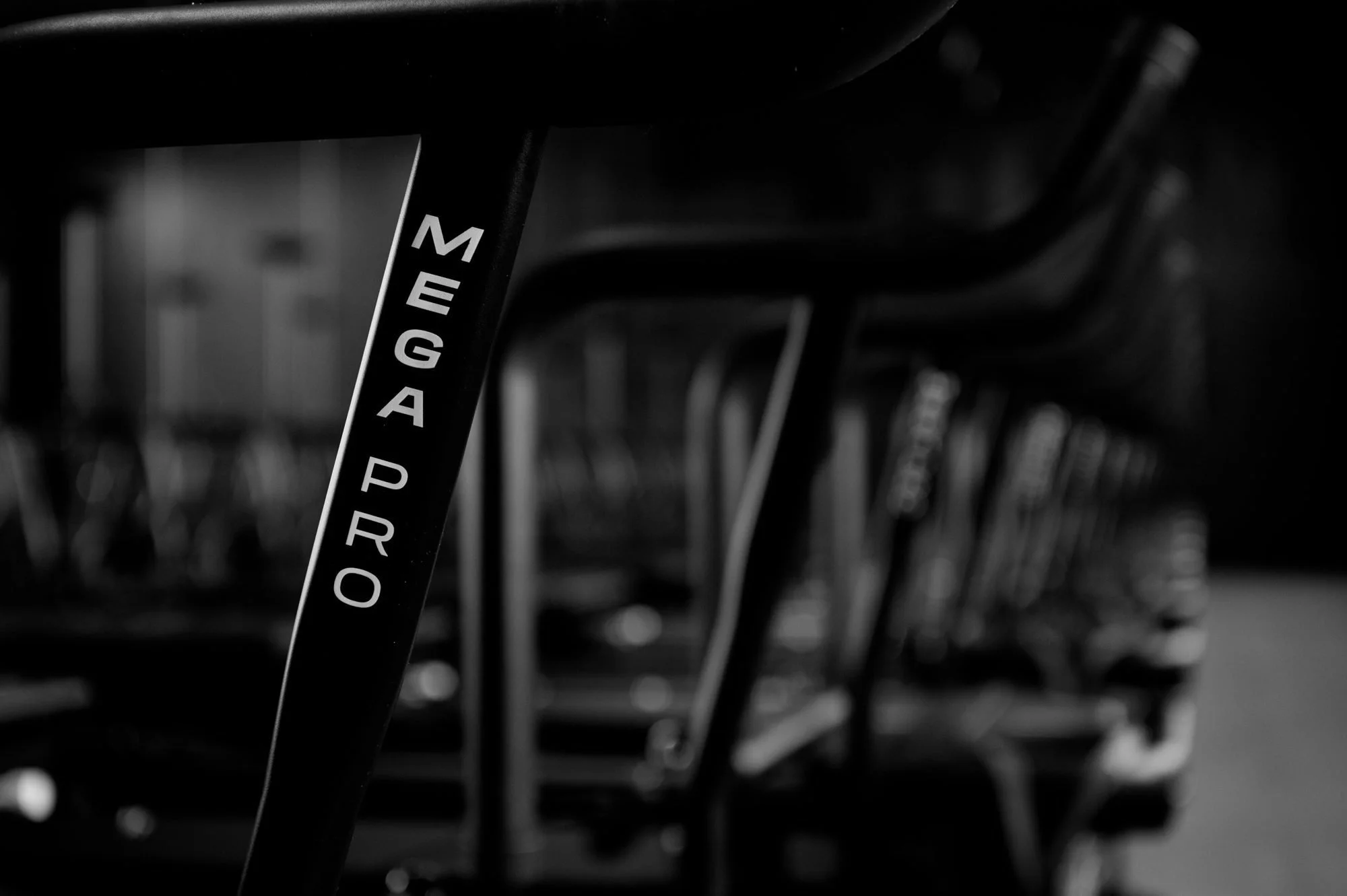
These photos are from our Central Edmonton studio, where we teach on Mega Pros. Keswick has M3 Megaformers, and Sherwood Park has Mega Pros too.
How the Springs Differ
On a typical traditional reformer, the springs usually sit toward one end of the frame — often near the foot bar — and connect to the carriage from there. On the Megaformer, the spring system sits under the carriage, toward the middle of the machine. That mid-machine placement is part of how the Megaformer is built to be worked from both ends.
Lagree springs are typically designed for higher resistance than the springs on a typical traditional reformer. That doesn't mean every Lagree spring is stronger than every reformer spring, or that adding more resistance always makes an exercise harder. How a spring feels depends on which one you use, how many you load, where your body is and the direction you're moving. A lighter spring can still ask a lot of you.
Spring colors also aren't universal from one brand or model to the next. The same color can mean something different on another machine, so it's always best to follow your instructor rather than guessing what a color should feel like.
At House Of Lagree, our studios are set up this way:
At Keswick, we have M3 Megaformers. On those machines, red springs are the heavier ones and yellow springs are lighter.
At Central Edmonton and Sherwood Park, we have Mega Pros. On those machines, white springs are light, black springs are heavy and grey springs are the lightest.
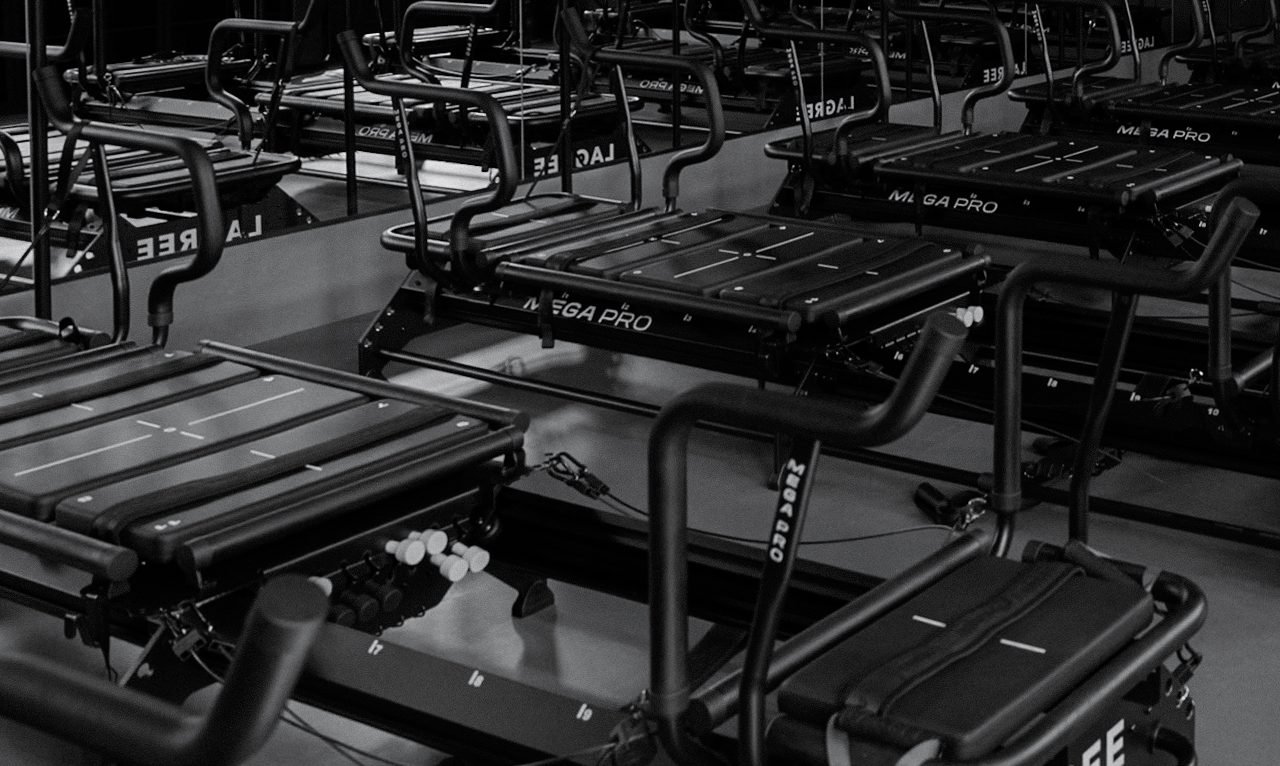
Cables and the Mega Pro's Lifting Panels
A typical traditional reformer uses a set of ropes or straps at one end of the machine, usually running through pulleys to the carriage. Contemporary reformers vary, but that one-end rope-and-pulley setup is still the common layout.
The Megaformer uses two separate sets of cables connected to the carriage. Combined with the handles and straps along the machine, that setup supports pulling, holding and balancing from more than one direction as you work.
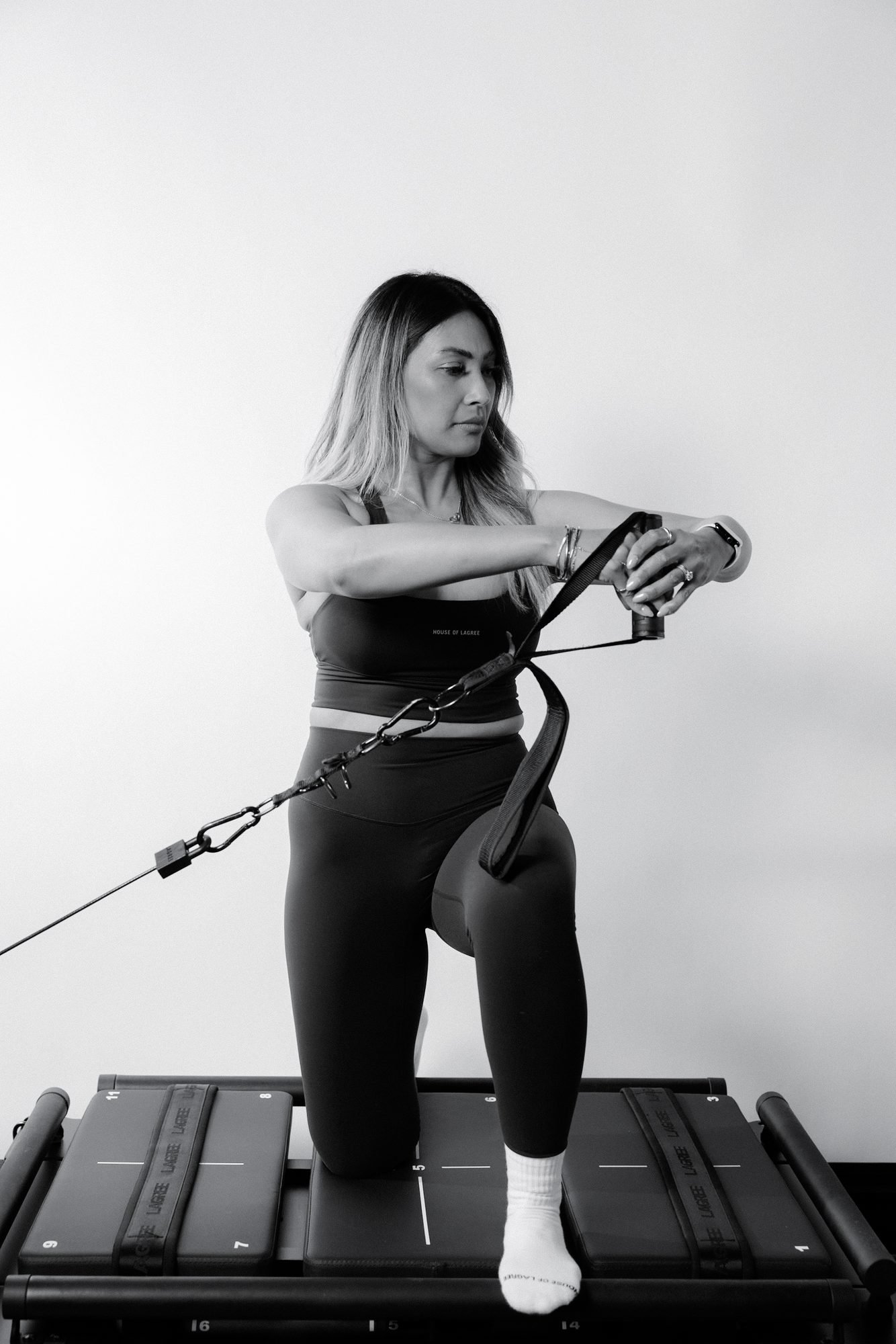
Our Mega Pros at Central Edmonton and Sherwood Park also have lifting panels. These are the front and back platforms, which can be raised to different angles. That gives your instructor more ways to set an exercise — offering additional variations, extra support or more of a challenge, depending on the movement. Our M3 Megaformers at Keswick have a different platform design and do not use those lifting panels.
HOW THE DESIGN SUPPORTS THE WORKOUT
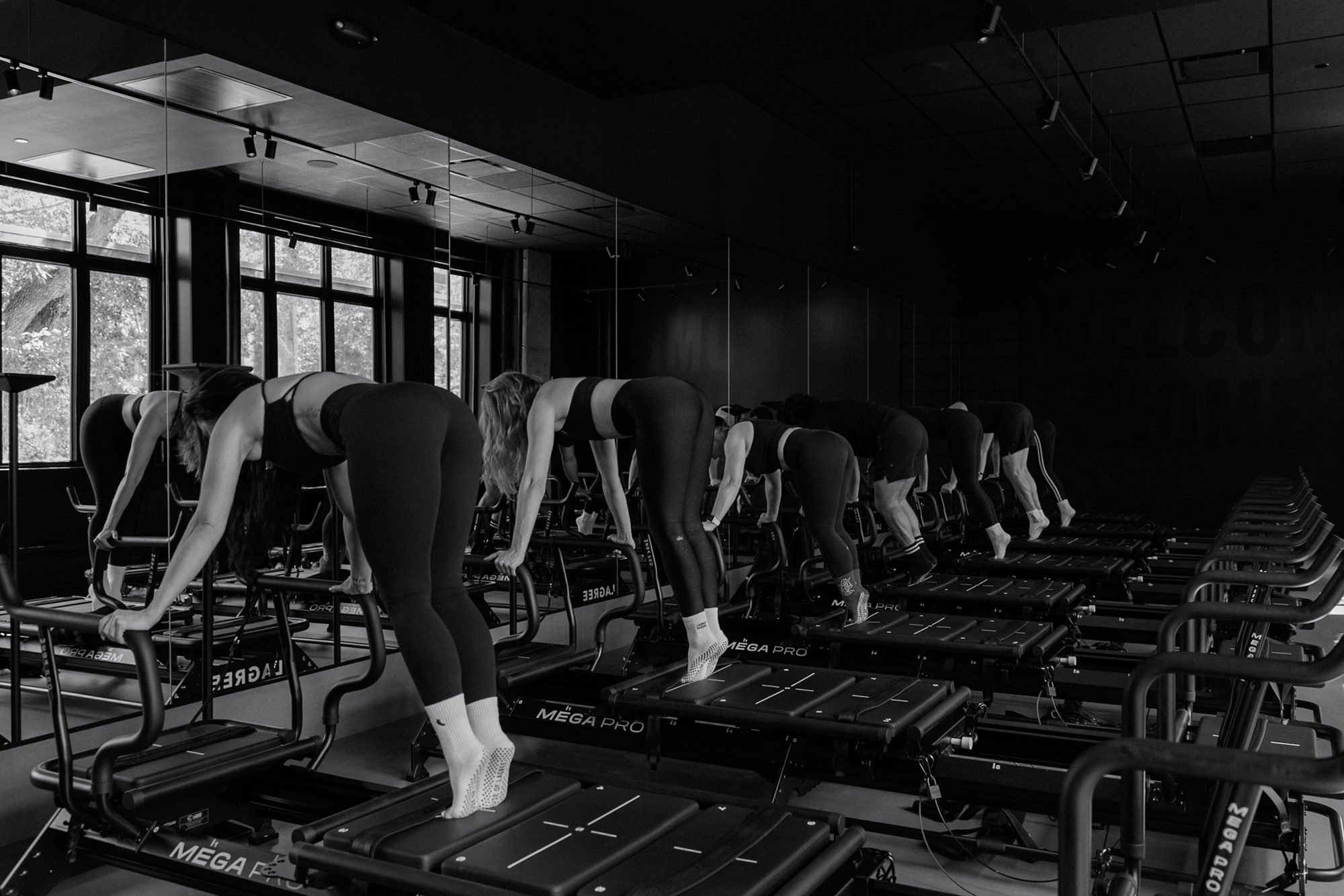
Because you have platforms at both ends and a carriage that moves between them, you can shift from a standing series into kneeling or plank work without leaving the machine. The springs stay part of the resistance as your body position changes, so the effort can stay continuous instead of stopping every time you reorient. Lagree notes that people typically spend little time on their backs during a Megaformer class, which reflects how this machine is arranged. The hardware is there so the class can ask for strength, endurance, balance and control through a range of positions.
A Mega Pro in use at our Central Edmonton studio.
WHY IT MATTERS WHO MAKES THE MACHINE
Because "reformer" names a category of equipment rather than one company's product, many manufacturers make reformers. Established studio brands (such as Club Pilates, which is a large franchise) have their own quality standards and warranties, and particular designs can be patented. There isn't a single dedicated manufacturer or governing company that every reformer has to come from.
The Megaformer is different in that sense. It is patented, proprietary Lagree equipment, designed for the method we teach, with a traceable manufacturer behind the design and service of the machine.
That category name also travels well beyond studio showrooms. Machines marketed as reformers appear on large online marketplaces such as Temu and Amazon. A listing or a low price doesn't tell you how a particular machine was built, tested or supported. Quality depends on the actual maker and model, not on the marketplace name alone.
Authenticity matters for more than the outline of a carriage. A machine that looks familiar isn't enough to make a workout Lagree. The method, the authorized equipment and how the class is taught all work together — and the machine alone doesn't certify the method.
COME SEE THE DIFFERENCE
Come try a class at House Of Lagree at Central, Keswick or Sherwood Park. Classes are capped at 12, and your instructor will help you get set up on the Megaformer and find a level of challenge that feels right.